Grace-Anne Kelly is one of our much-loved regular collaborators, and we greatly enjoyed her piece in our Autumn 2026 issue, on the power of appreciation. Check it out below!

Grace-Anne Kelly is one of our much-loved regular collaborators, and we greatly enjoyed her piece in our Autumn 2026 issue, on the power of appreciation. Check it out below!

Tantra writer and educator Dawn Cartwright is one of our much-loved regular collaborators, and we greatly enjoyed her piece in our Autumn 2026 issue, on the ‘silver branch perception’. Check it out below!

Love life now.
by Sandy C. Newbigging
Author and integrative practitioner Sandy Newbigging is one of our much-loved regular collaborators, and we greatly enjoyed his insightful piece in our Autumn 2026 issue on ‘the gratitude gap’. Check it out below! Alternatively, you can head to your local health shop to pick up your copy of the mag, or have a copy delivered to your door each season at positivelife.ie/subscribe <3
Something strange happens when we look back. A job or relationship we complained about. A home we couldn’t wait to leave. A version of ourselves—younger, freer, less burdened—that we’d give quite a lot to have back for an afternoon. At the time, there seemed little to be grateful for. But in retrospect, we can often see how good it actually was. We were there for all of it, and somehow, we missed it.
There are reasons for this. Psychologists call one of them rosy retrospection—the tendency to remember past experiences more positively than we felt them at the time. Alongside this, negative emotions attached to memories tend to fade faster than positive ones—the arguments blur, the tender moments remain. And once we’re no longer inside an experience, psychological distance does something else: it allows us to see the bigger picture. The daily fears and frictions fall away, and what mattered rises to the surface. The result is that we often see the value of something only once we’re no longer in it—and no longer close enough to be distracted by its imperfections.
I’ve felt this myself. Looking back at past relationships, I’ve found myself quietly aching for the best moments—the connection, the attraction, the laughter, the lazy Sunday afternoons together. Each relationship had its own real difficulties, and there were genuine reasons things ended. But I can see now that I didn’t fully appreciate what else was there while it was there. The psychological distance that makes it visible later wasn’t there then.
This isn’t an argument for regret—or for going back. And of course, not all memories become rosier with time. But
this tendency points to something worth paying attention to. If we can often find more to be grateful for when looking back, perhaps we can appreciate more in the present—while we’re still living it.
We tend to think of appreciation as something we do—a discipline or a daily practice of counting our blessings. And while there’s nothing wrong with gratitude lists, this framing misses something important. It treats appreciation as a skill to be developed rather than a natural capacity that’s simply being blocked. So rather than focusing on “how can I be more grateful?” it can be more useful to begin with a different question: what’s getting in the way?
Before we explore that, let’s be real first. If your life is genuinely difficult right now—if you’re grieving, struggling, exhausted, or in the middle of something objectively hard—this isn’t an invitation to paper over it with gratitude. Naming what’s painful and working to change what can be changed is the most honest and intelligent response to real difficulty. Pretending otherwise isn’t appreciation. It’s bypassing.
What I’m pointing to is more nuanced. Even in the middle of difficulty, most of us are living more than just the hard things. There are still small moments, kindnesses, and ordinary pleasures that exist alongside the pain. We can become blind to those, too. The invitation isn’t to feel grateful for the difficult things. It’s simply to notice that the difficult things aren’t the only things—and that waiting until later to appreciate what’s already here can be a trap.
This is true not only when life is hard. Even when things are going well—no crisis, no grief, no obvious difficulty—appreciation can still somehow be absent. Many of us live with a low hum of dissatisfaction running beneath the surface. It doesn’t necessarily declare itself as full-blown unhappiness—more a subtle sense that life is slightly less than it should be. That we’re not quite where we’re supposed to be–yet.
Hope for better is a valuable human instinct. But when today becomes something to rush past to get to tomorrow, it comes with a cost. When we’re focused on what’s missing, what’s wrong and needs improving, or what hasn’t happened yet, we are largely absent from what’s actually here. Instead, we’re living in a mental future that appears to deserve more appreciation than the life we’re actually in.
And then, years later, we look back—and feel the ache. The strange thing is that the life we’re nostalgic for wasn’t perfect when we were in it. We had worries then, too. We had things we were trying to fix. The difference isn’t that life was better—it’s that we’re no longer inside the details of it. From a distance, the beauty becomes visible in a way it couldn’t when we were too close. This is why appreciation doesn’t require effort. It requires perspective and presence.
There’s a principle I return to often in my work: we suffer less from our circumstances than from our relationship to our circumstances. Two people can face identical situations and have entirely different inner experiences—because what shapes how we feel isn’t primarily what’s happening. It’s the lens through which we’re seeing it.
When we’re living in a constant state of “not yet”—not yet successful enough, not yet settled enough, not yet the person we’re trying to become—everything we have gets filtered through that lens. The good things are noticed briefly and then set aside. The difficult things get amplified. The story we’re telling ourselves about where we are colours everything. Appreciation, then, becomes more natural when that lens shifts. When we’re no longer relating to life as something to be arrived at, but as something we’re already in.
In retrospect, psychological distance does this for us automatically. Perspective and presence offer us the same clarity— deliberately, and without having to wait. Two orientations I’ve found genuinely useful for seeing differently:
The first helps with perspective, and includes a simple yet powerful retrospective question: If I were looking back at this period of my life ten years from now, what would I appreciate that I’m not fully seeing yet? This question temporarily lifts you out of the “not yet” orientation. It lets you see your current life from the perspective of someone who no longer has it. The home you find too small. The friend with their annoying traits. The health you’re taking for granted. The children at the age they are right now, before they grow into the next version of themselves.
The question doesn’t manufacture gratitude—it reveals what’s already there, waiting to be seen.
I’ve been living this myself. My wife and I are building a home, and it’s taken far longer than we anticipated. Over the three years—and counting—I’ve seen how easy it would be to settle into a low-grade frustration—a permanent “not yet,” waiting for the walls, the roof, the day we can finally move in and begin the life we’ve imagined.
But I noticed something about that orientation. If I spend the years of planning and building in quiet dissatisfaction, I won’t suddenly become content when the keys arrive. The mental habit of “not quite there yet” doesn’t dissolve when
circumstances change—it simply finds a new target. Once we’re in, there will be furniture we haven’t found, rooms that aren’t finished, a garden that needs another season. The frustration wouldn’t end. It would simply move. And so, I’ve chosen to appreciate where I am now, in the middle of the waiting—because the alternative isn’t just unpleasant. It’s a rehearsal for missing the life I’m about to arrive at, too.
The second orientation is about presence, and it’s more fundamental. Appreciation isn’t really about what you have. It’s about how awake you are to what you have. When we are genuinely present–not distracted by the past, not waiting for the future, not running a quiet commentary on how things should be different–we find that appreciation arises naturally. It’s what’s left when the noise settles.
This is why presence and appreciation are so closely connected. Presence isn’t passive—it’s an active quality of being attentive to what’s here.
When the mind is quieter, when we’re less caught up in the project of self improvement and more simply here, we
begin to notice the texture of our actual life. The coffee still warm. The light through the window. The conversation that went somewhere unexpected. The ordinary Tuesday that, in ten years, we might look back on with tenderness.
When clients begin to make this shift—what they describe isn’t dramatic. It’s quieter than that. A Tuesday that feels less like something to get through and more like something to savour. A conversation they find themselves grateful for while it’s happening. A moment of noticing that what they have, right now, is more than they’d been giving it credit for.
The life you’ve been waiting for is here. We have a tendency to love our life later—when the distance allows us to see more clearly. The work is to love life now. Not by trying harder to be grateful, but by being present enough to notice what’s already here. After all, retrospect has a way of revealing how good today actually was.
Visit sandynewbigging.com to explore Sandy’s Inner Work Library – for developing the understanding, awareness, and presence that make life fuller.
Delight in the elements.
by Judith McAdam
Manifestation coach and spiritual teacher Judith McAdam is one of our much-loved regular collaborators, and we greatly enjoyed her piece in our Autumn 2026 issue on ‘the art of feeling abundant’. Check it out below! Alternatively, you can head to your local health shop to pick up your copy of the mag, or have a copy delivered to your door each season at positivelife.ie/subscribe <3
We came together to consciously live the elements and the laws of the Universe. What unfolded surpassed everything we expected.
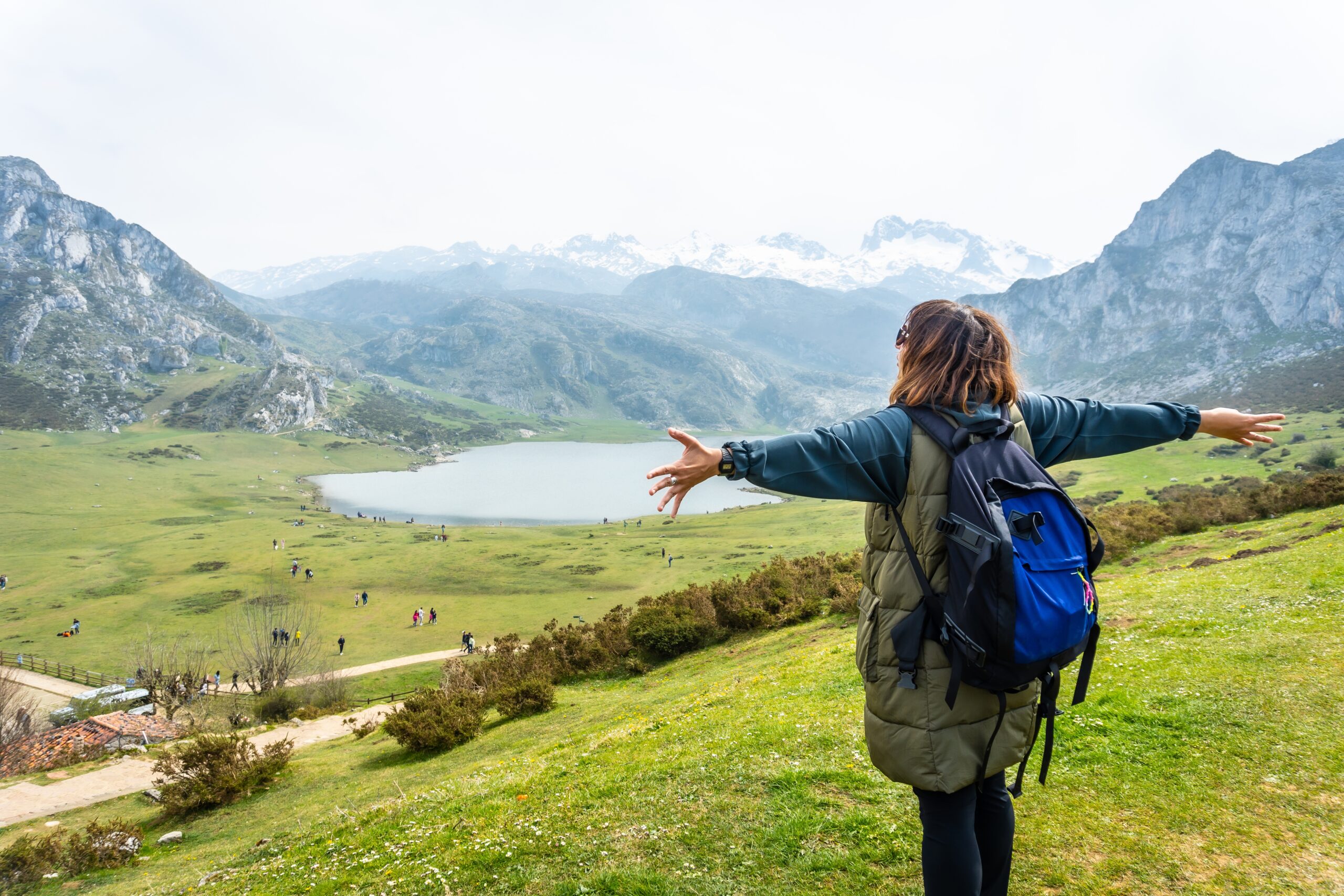
I found myself sitting in a stone farmhouse in the Asturian hills, not far from the sea. Outside, a lemon tree hung heavy with fruit. Valley cows grazed nearby, their bells marking a slow, unhurried rhythm. On the table in front of me were the remnants of a shared meal, olive oil, good bread, a fresh crisp salad. Around the table sat the seventeen of us, some of us strangers just five days earlier, now something else entirely. And I thought: this is it. This is what abundance actually feels like.
We had come to Asturias for The Alchemist’s Journey. This was a retreat I had been building in my mind and heart for years, structured around the Hermetic laws and the four classical elements. What I hadn’t fully anticipated was how Mother Earth herself would become our greatest teacher. Asturias is one of the greenest, most unspoiled corners of Europe. It is a place where ancient mountains meet the Cantabrian Sea, where you can stand on a beach and smell the eucalyptus forest behind you. From the first morning, something began to shift in us. Not because of anything I said or taught, but simply because we had stopped rushing past life and started living inside it.
“Abundance is not a destination. It is a frequency, one the natural world broadcasts constantly, if we are tuned to receive it.”
We talk about abundance constantly in the spiritual world. We set intentions around it, journal about it, recite affirmations. But what I witnessed on that coastline was something far more visceral. It was what happens when human beings stop treating abundance as a concept and start experiencing it as a felt reality. The Hermetic principle of correspondence tells us that the outer world mirrors the inner. In Asturias, surrounded by the eucalyptus forests, the wild beaches, the mountains rising behind us and the vast Cantabrian Sea stretching out in front, something in each of us quietly recalibrated. It became harder to believe in scarcity. Not because we argued ourselves out of it, but because the land kept contradicting it, moment by moment.
We worked with the four elements as living vibrations rather than symbolic concepts. Mother Earth was not a metaphor for groundedness; it was actual sand beneath bare feet, actual soil in the eucalyptus forest, the eucalyptus kernels we collected as we walked, breathing it in deeply. Water was not a symbol of flow; it was the Cantabrian Sea and the de Sella River, which we kayaked. We learned firsthand how futile it is to go against the current, how much easier life becomes when you move with the flow. Fire was a ceremony at dusk; under the Flower Moon on the night of our arrival, we gathered around a shared flame and chose, together, to release what no longer served us. And Air, Air was the sea breeze that came each morning like a gentle instruction, moving through the eucalyptus leaves, clearing everything that had gathered overnight.
Working with the elements this consciously, this physically, is a completely different experience to reading about
them. It was abundance in its most original form. It really is the planet giving everything it has, all the time, to anyone paying attention.
“The Earth was teaching what no workshop alone can fully teach, that we are already surrounded by more than enough.”
What struck me most was how quickly genuine appreciation became effortless. Not performed appreciation, not the kind you write in a journal because you’ve been told to. Real appreciation, the kind that gives you butterflies before your mind has caught up. A woman helping another as they hiked the Ruta de las Xanas. One of the men sitting each morning at dawn, composing a song he would later sing to us all. Another participant lighting up as new friendships formed around her, finding herself at the centre of a group that simply, quietly, filled her with love.
The HeartMath Institute has spent decades researching what happens physiologically when we enter genuine states of appreciation. The heart’s electromagnetic field expands. Coherence between heart and brain increases. The nervous system settles. What I noticed in Asturias was simpler than any of that science, and also its living proof, it was people cracking open. Becoming more receptive. The earth doing the work, and all we had to do was show up and let it.
Florence Scovel Shinn wrote that the game of life is a game of boomerangs; what we send out returns to us. At
Covadonga, we stood looking out at the sheer magnificence of the mountains, and something became very clear: we were seeing our own magnificence being mirrored back to us. The experience of life that came back was so rich, so layered, and so generous that we began to realise we hadn’t known we were allowed to feel this good. That is the real poverty most of us carry, not lack of money or resources, but the belief that this quality of aliveness isn’t available to us. Slowly, our intentions began to shift. ‘I want more’ was igniting inside of all of us. More of this. More of nature’s unlimited abundance.
You don’t need to go to Spain to access this. You need to go outside. You need to slow down enough to register what
is actually there. A single tree in full leaf is an act of immeasurable generosity if you look at it long enough. Rain on a roof. The smell of the earth after it. The way the light arrives differently each morning, as if it has made an effort especially for you. The natural world is in a constant state of abundant giving, and most of us are too busy, too scheduled, too inside our own heads to receive it.
The Alchemist’s Journey reminded me—again, because these things take repeated learning, that abundance is not something you acquire. It is something you tune into. It was never being withheld. It is broadcasting on a frequency of extraordinary richness, all the time. Our invitation is simply to become the kind of people who can receive it. To let the elements in. To feel Mother Earth. To watch the water. To stand in the wind and understand, in your body rather than
your mind, that you are part of something wildly, extravagantly alive.
Richness, for me, was sitting at the top of the mountain in Casa Generosa in Pedroveya. That legendary little restaurant at the end of our pilgrimage hike on the Ruta de las Xanas, the seventeen of us around the table, plates of traditional Asturian food in front of us, experiencing the friendship, the love, and the laughter. Plenty of laughter.
With an abundance of love,
Jx
Judith McAdam is a manifestation coach and spiritual teacher with 28 years of experience, bridging ancient wisdom with modern science through workshops and retreats in energy healing, heart-brain coherence, and manifestation.
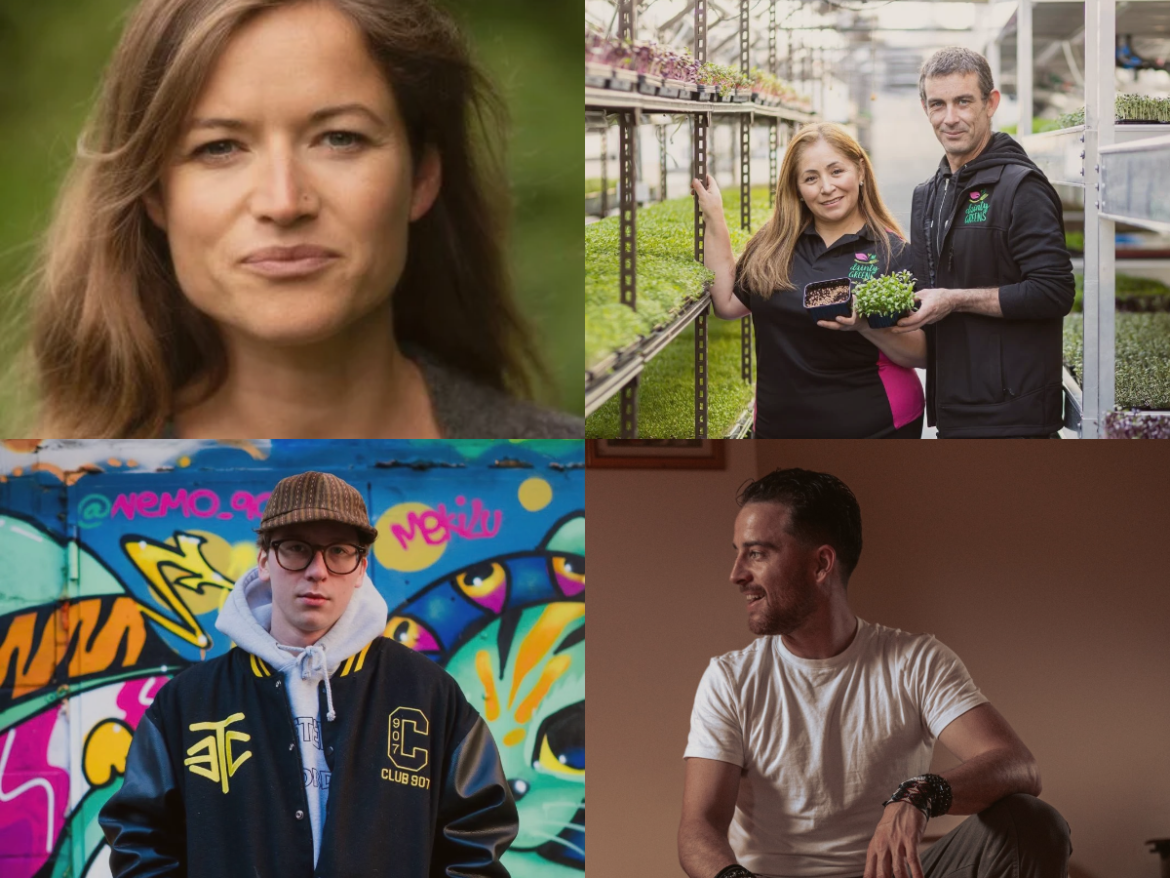
Our Spirituality in the City series celebrates the moments of connection and transformation that can happen in the most unexpected places. This time, we explore how Appreciation can completely transform challenges or seemingly mundane moments.
Carol Lopez
When I think about a place I truly appreciate, my heart goes straight to our greenhouse.
It is much more than a place where we grow microgreens. It is a place that grew with us.
Years ago, this greenhouse was empty and abandoned, waiting for a new purpose. At the same time, our family was also beginning a new chapter. My husband left his career as a chef, I was rebuilding my path after moving to Ireland, and together we decided to bring this space back to life.
Little by little, with care, patience and a lot of learning, the greenhouse started growing again—and so did we.
Our son has grown up surrounded by seeds, plants and nature. He has seen that beautiful things take time, that mistakes are part of learning, and that with love and dedication something tiny can become something amazing.
Every tray we grow is a reminder of transformation. A tiny seed becoming food, an abandoned greenhouse becoming full of life, and a family creating something meaningful together.
I am grateful for this little glass house in Dublin—the place where plants grow, dreams grow, and where our family continues to grow too.
Patrick-joseph
For years, I searched for something more through different spiritual paths. Meditation, manifestation, energy work and the language of the universe all gave me moments of insight, but none quietened the deeper longing within me. Then, unexpectedly, I encountered Jesus Christ.
His name can be difficult to mention in many spiritual spaces. Some carry understandable wounds because of the abuse, corruption and crimes committed by people within the Church. Those wounds deserve compassion, but Christ is not the same as those who have failed in His name.
What drew me to Jesus wasn’t religion. It was the man He revealed Himself to be: unwavering in truth, rich in mercy, courageous in love and deeply compassionate towards the broken. He asks not for perfection, but surrender and an honest relationship with Him.
Following Christ hasn’t removed suffering or answered every question, but it has transformed where I place my hope. Instead of carrying life through my own understanding, I’ve found peace in trusting the One who knows me completely. I’ve met many sincere people searching within the holistic space. I know that search because I lived it. Perhaps the answer isn’t another path to discover but allowing Jesus Christ to search your heart and lead you.
Joanne King
When I think about the things that have shaped my life, I think of three: yoga, the sea, and my beautiful son. They are very different, yet they have all quietly taught me some of life’s most important lessons.
Living and teaching yoga by the sea has given me a deep appreciation for the healing power of nature. Some days the waves are gentle; other days they’re wild, but they always invite me to let go of what I can’t control and trust the flow of life. Whether I’m swimming in the sea or teaching a class to the sound of the waves, I feel deeply grateful for the perspective, connection, and peace the ocean brings.
My son has been my greatest teacher. He has shown me that the most meaningful lessons don’t come from having all the answers, but from being fully present. Through him, I have learned patience, resilience, and the quiet strength that comes with unconditional love. He has encouraged me to see the world with fresh eyes, to slow down, and to appreciate the small moments that are so easily overlooked.
When I reflect on these relationships, I realise they are all connected in the way they have shaped me. They have taught me to be more present, more accepting, and more open to life’s constant changes. They remind me that happiness isn’t found in striving or certainty, but in connection—to nature, to the people we love, and ultimately, to ourselves. To me, that is the true meaning of yoga, and for all of these gifts, I feel deeply grateful.
Hal Warren
As a kid, I learned that to do the right thing, one must be cautious, one step ahead, analytical and in tune. In rock climbing, we learn “sequencing”. The act of reading and rehearsing the movements in a climb before you even step on the wall. It kinda looks like a mime dance if you were imitating someone doing a really bad Macarena.
After 8 years of competitive climbing, 3 National Championships, and close to 5,000 hours of practice, being worried was something I learned to manage, not relinquish. This analytical side of my brain flourished and was given freedom to sprint, to be wild. But it always needed to be tamed.
The climbing gym ultimately taught me how to just be. I learned how to achieve high things, but slowing down is hard for me. Not moving for longer than 5 minutes is hard. Existing is hard. But you don’t have to “be” anything at this refuge. I’m so grateful to be under the trees, smell the coffee and hear laughter that welcomes me and the strongest-hearted people who embrace me. My identity was built around doing, but my attempt is to shape it by rest. The climbing gym asks that you show up for both. My recommendation: stay a little longer.
The Power of Appreciation
Each reflection reminds us that a perspective of Appreciation can completely transform our relationship to the present moment for the better.
It’s a real-life superpower giving us the ability to see the beauty in the ordinary and the blessing in the struggle. What can you transform using the power of appreciation today?
Subscribe to Positive Life Magazine
Love stories like this? You’ll find Spirituality in the City and more uplifting features in every issue of Positive Life Magazine.
Subscribe now to receive inspiration, community stories, and conscious living insights delivered straight to your door!
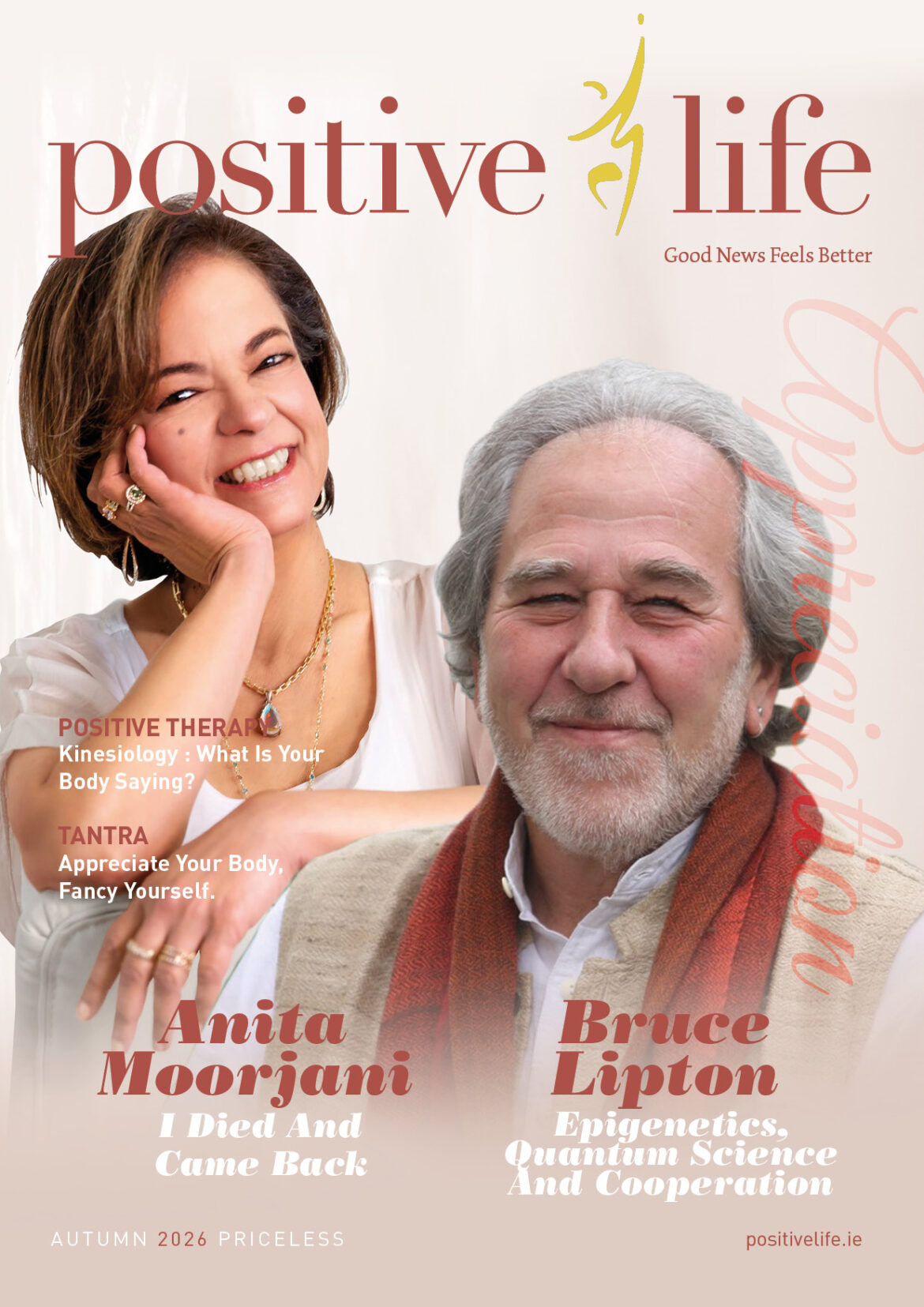
AVAILABLE NOW AT HEALTH SHOPS NATIONWIDE OR HEAD HERE TO SUBSCRIBE TO THE MAGAZINE!!
Our newest issue of Positive Life Magazine is here! And it’s filled with inspiring stories, uplifting wisdom, and powerful conversations around this season’s theme: Appreciation <3
To offer readers a break from the fast-paced world we live in, we have chosen to focus on longer-form articles this time, so sit back, relax and get ready to fully immerse yourself in the wellness worlds below!
Inside this issue you’ll discover:
Fascinating interviews with our cover stars, Anita Moorjani (@anitamoorjani) and Bruce Lipton (@brucelipton), who will be joining us in Dublin this autumn
A selection of wonderful products, events, and wellness businesses in our Vibes section, including a hyperbaric oxygen centre located in Clondalkin (@howellness_centre), a luxurious retreat in Georgia (@healthoptimizingclinic), and stellar magnesium supplements! (@orielmagnesium) (@powerfulireland)
Inspiring perspectives and experiences of Appreciation from our regular writers and community
The story behind Dublin’s favourite wholefood restaurant Cornucopia (@cornucopia_restaurant)
Introducing our new Breathing Space section, which includes reflective pieces from curious people involved in everything from hypnotherapy to Rolfing to microgreens (@rory.rolfing) (@daintygreens_cmh)?
Systematic kinesiology, yoga nidra & so much more! (@askireland_)
We hope this issue brings you as much joy and inspiration as it did us in creating it, and that it allows you to appreciate the things around and within you, even just a little bit more <3
Pick up a copy at your nearest health store!
Scan the QR code to subscribe or head to positivelife.ie/subscribe and get every issue delivered to your door.

This website uses cookies to improve your experience. We'll assume you're ok with this, but you can opt-out if you wish. Accept Read More