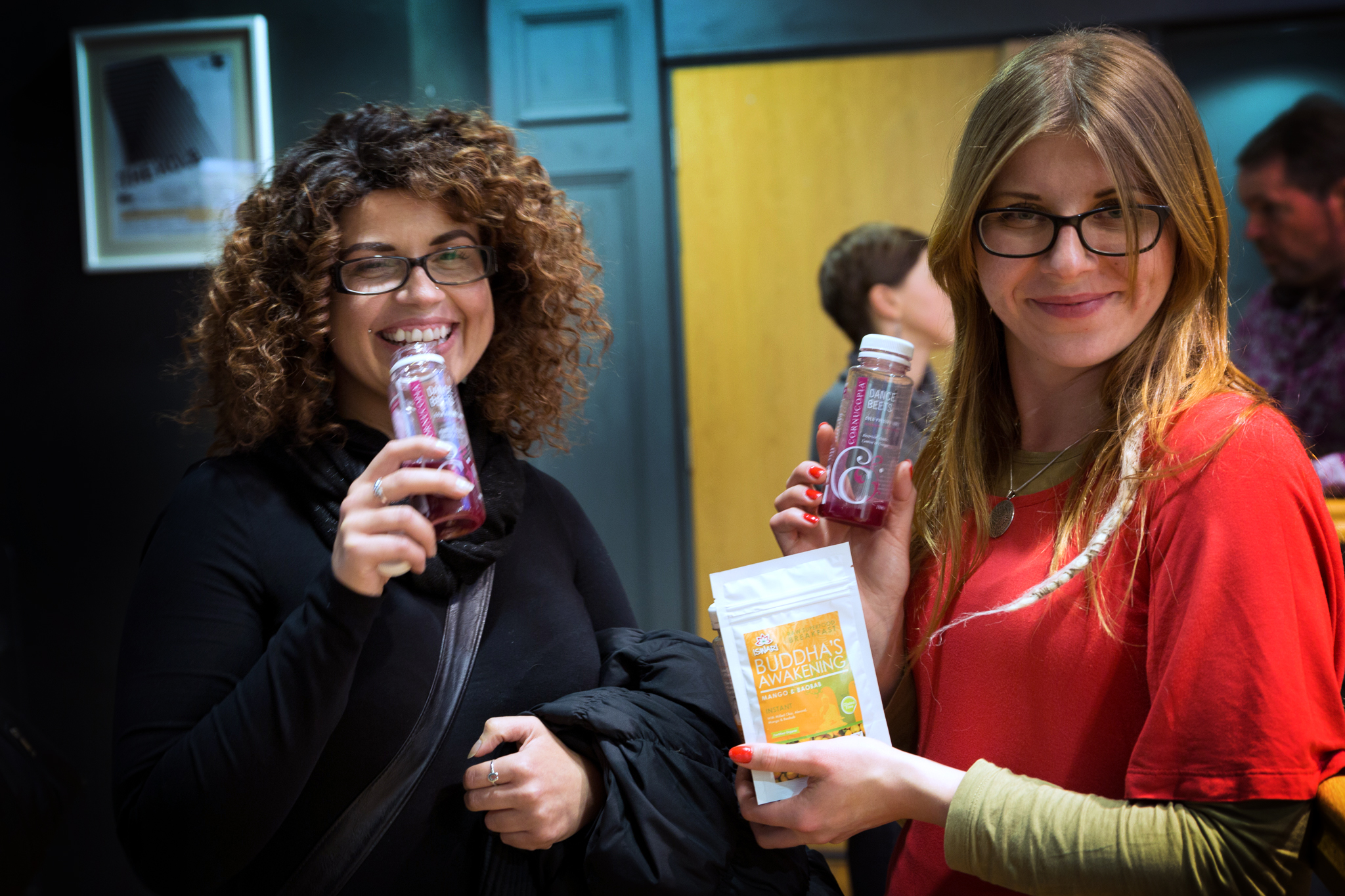
We want everyone to enjoy the great images we managed to capture during our wonderful event with Teal Swan. Check out some of the images below or click on the player to watch them in full!
Images: Celine O’Donnell



We want everyone to enjoy the great images we managed to capture during our wonderful event with Teal Swan. Check out some of the images below or click on the player to watch them in full!
Images: Celine O’Donnell


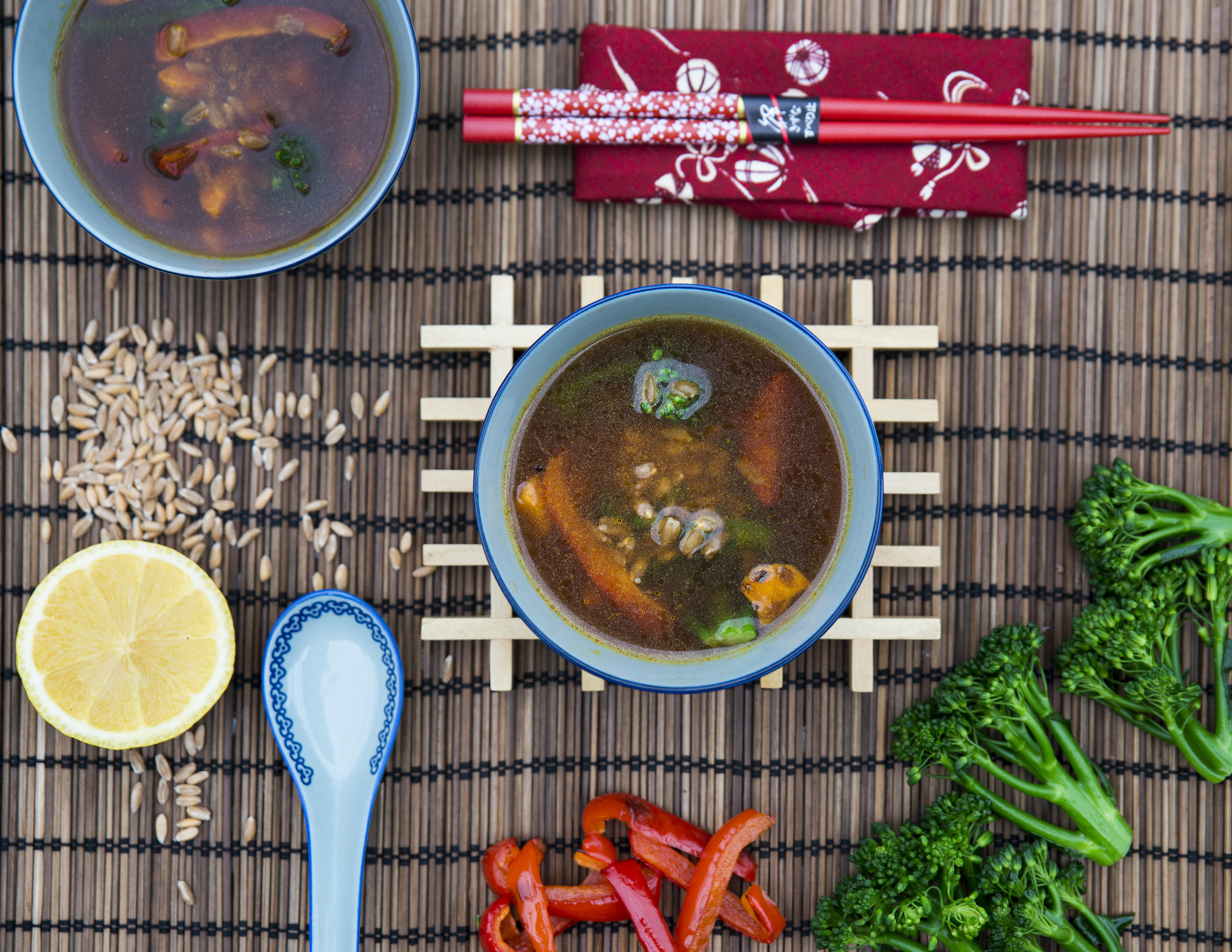
Cornucopia recently celebrated 30 years of amazing food! The party was this past Sunday but we are sure it will continue for the rest of October! Here’s a delicious recipe from James DeBurca, Vegan Chef at Cornucopia.

Miso is one of my all time favourite fermented foods. It is made from a combination of cooked beans, grains, salt and koji that have been aged in wooden casks for six to twenty-four months until they have turned to a smooth paste. It can vary from a dark brown to a lighter whiter paste depending on the beans and grains that have been used. The dark brown misos are the saltiest and heaviest while the whiter coloured ones are a little sweeter and lighter. Miso can be added to many savoury foods such as soups, sauces and stews due to its salty and flavour enhancing properties.
With a little more practice you can even use it in desserts as sweet and salty is an amazing flavour combination. This recipe calls for barley miso. I associate this type of miso with the darker days and colder weather that comes with autumn when I crave more warming foods. Use the stock recipe as a base and try it with different types of miso over the seasons. Adjust the vegetables and grains as the seasons dictate and add a little protein for a more filling broth. This broth recipe can be used as a base while experimenting with the filling ingredients to accommodate what you have at hand and what may be lost at the back of your fridge or cupboard.
Serves 4
Ingredients for the stock:
15mls (1 tablespoon) rapeseed oil
150g onion (1 medium onion)
120g carrot (1 medium carrot)
80g celery (1 medium celery stick)
20g ginger (small thumb-sized piece)
50g garlic (4 to 5 cloves)
1 teaspoon sea salt
5g dried shitake mushrooms (about 3 mushrooms)
10g dried kombu seaweed
2 litres of water
4 tablespoons barley miso
Ingredients for the soup:
250g red peppers (2 medium peppers)
240g carrots
15ml lemon juice
300g sprouting broccoli
100g whole spelt grain
30ml rapeseed oil
1 – Boil one litre of water and soak the shitake mushrooms and dried kombu while you prepare the rest of the broth.
2 – Peel the onion and roughly chop it, along with the carrot, celery, ginger, garlic and salt. Heat the 15ml of rapeseed oil in a medium saucepan then add the chopped vegetables to sauté gently over a medium heat. Cover the saucepan with a lid, reduce the heat and cook for ten minutes, stirring occasionally.
3 – After ten minutes, add the soaked mushrooms and kombu along with the water in which they soaked. Bring the stock to a boil then simmer for another fifteen minutes. Now the stock is ready and you will need to remove it from the heat. Strain it through a sieve, preserving the stock water and discarding the cooked vegetables and seaweed. Finish the stock by dissolving the four tablespoons of miso into the stock water. Now you have a basic miso broth.
4 – Place the broth over a very low heat to keep it warmed while you finish preparing the rest of the ingredients. Start by rinsing the spelt under cold water then placing it into a small saucepan and covering with about 600ml of water. Place the saucepan onto a high heat and bring it to the boil. Reduce the heat, cover with a lid and simmer the spelt for about 30 to 35 minutes until it has
softened and cooked thoroughly. Once cooked, strain the water from the spelt and set the cooked spelt aside until needed.
5 – While the spelt is cooking the vegetables can be roasted. Heat your oven to 180c. Prepare the red peppers by halving the peppers and removing the seeds and stalk. Slice the peppers into long thin strips and mix them with 15ml of the rapeseed oil. Place the oiled pepper strips onto a roasting tray and into the pre-heated oven to roast for 15 to 20 minutes. Top, tail and peel the carrots then roughly chop them into bite sized pieces. Coat them with the 15ml of lemon juice and remaining 15mls of rapeseed oil and place them onto a roasting tray. Cover the roasting tray with tinfoil to help the carrots to cook. The carrots will need to be roasted for 25 to 30 minutes but the tinfoil will need to be removed after 15 minutes
cooking to allow the carrots to caramelise lightly for the final 15 or so minutes of roasting. Once the pepper and carrots are cooked they can be removed from the oven and set aside until needed.
6 – Prepare the broccoli by removing some of the tough parts of the stalk then chopping the remaining broccoli florets into medium pieces. It is best to cook the broccoli just before serving. It can be cooked by steaming or blanching the broccoli briefly for two minutes.
Once all the ingredients are ready, assemble the soup by
ensuring the miso broth is warmed. Divide the cooked red
peppers, carrots, spelt and broccoli into four bowls and pour the
miso broth over each one and serve.
This is an excerpt from the summer issue of Positive Life. Subscribe | Stockists

Intro & Recipe by James Burke, Vegan Chef at Cornucopia.
While I am writing this, I have no idea of what the coming season holds. One fact I do know, is that even if the weather doesn’t live up to my hopes, the locally grown strawberries surely will. I can honestly say that I have tasted strawberries from all over the world and none have I experienced like the softly sweet and luxurious berries that are grown outdoors during the Irish summer season.
In the past, I preferred fresh strawberries rather than heated or cooked ones. Nowadays, I have changed my thinking and it is all because of the food dehydrator. These magic machines gently remove a large amount of the water content, but none of the flavour or nutrients. Using 300 grams of fresh berries will leave the following torte a little soggy, but I need that amount for the maximum flavour. That is where the idea for drying them came from. For those who don’t have access to a food dehydrator, I have also included instructions on how to dry them in a regular oven. Otherwise, you can use freeze-dried strawberries in this recipe and they are available in whole or powdered form.
Strawberries, white chocolate and vanilla are an obvious combination of course, but the twist here is that this dessert is completely dairy-free. Traditional white chocolate contains cocoa butter, dairy milk, and sweetener so we use cocoa butter, coconut cream and agave.
It’s like summer in the form of a torte!
Read the rest of the intro, recipe and notes in the summer 2016 issue of Positive Life. Subscribe | Stockists

Image by Emma Loughran
By James DeBurca, chef at Cornucopia Dublin.
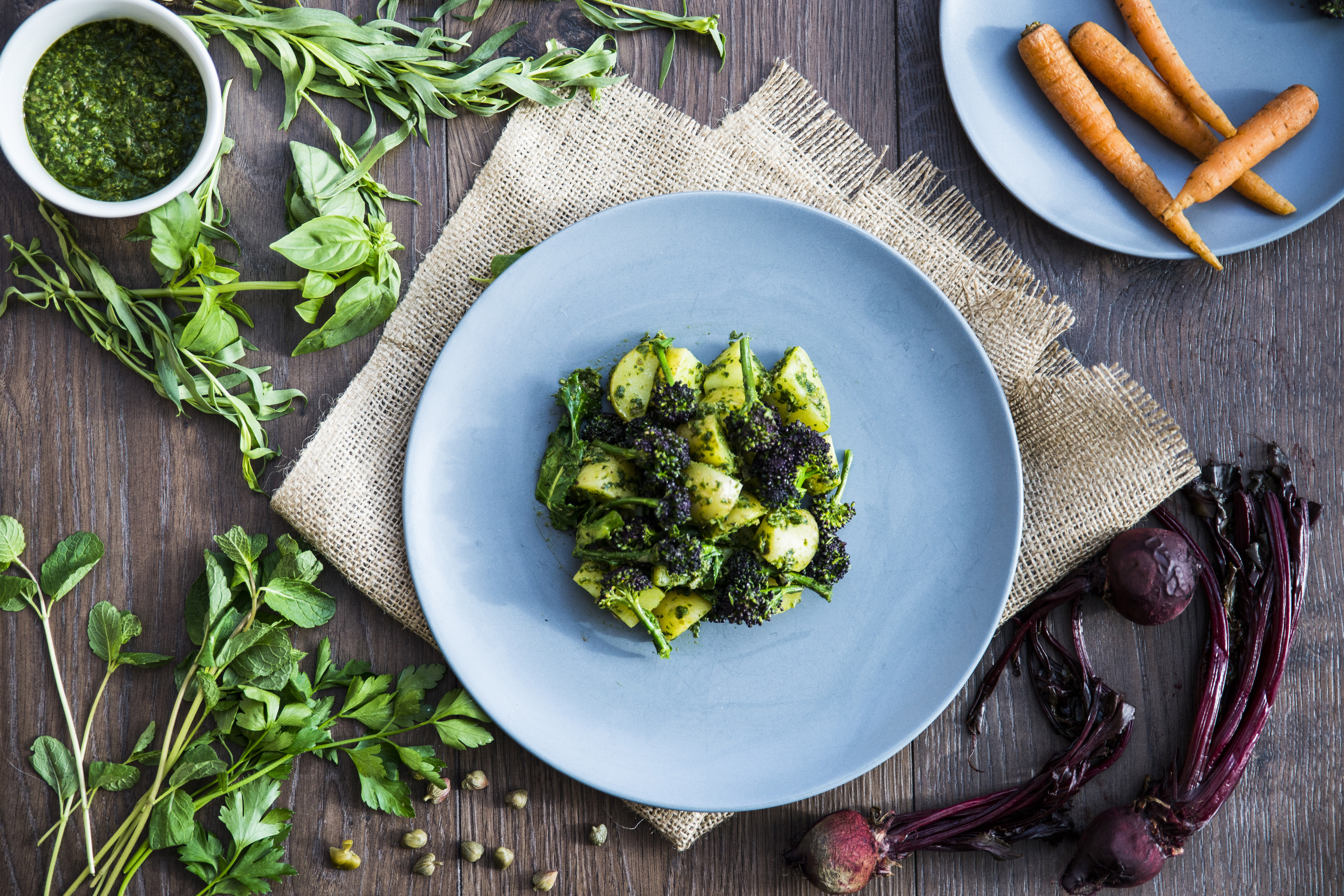
Salsa verde translates as ‘green sauce’, a very literal and descriptive name and a hugely popular Italian sauce that has
many uses and adaptations. Even more variations of green sauce can be found in the cuisines of Europe and Latin America. The ingredients that I believe all Italian style salsa verdes have in common are the ones included in the recipe below. The green herbs provide fragrance, the capers and garlic the pungency and wine vinegar or lemon the sharp tang, all brought together with a little olive or rapeseed oil. In this recipe I’m using it to dress a chilled potato salad, but let your imagination inspire you to use it wherever you deem perfect!
The baby vegetables in the photo were grown on Iona Fruit Farm in North County Dublin. While they’re a lot more expensive than ‘regular vegetables’, they have an added charm in that they are grown here in Ireland and have allowed independent growers to diversify. Donnacha Donnelly from Iona Fruit Farm explained to me that it was becoming very difficult to supply vegetables to exact specifications. The specifications required by major retailers are often to the detriment of the farmer. Donnacha now grows a lot of baby vegetables and has noted the benefits, as they can be harvested to less specific shapes and sizes, have a shorter growing time and lessen the workers’ exposure to the winter elements. The downsides are the extra time spent packing the vegetables and that is often where cost can creep up. The benefit to us is that we get to buy locally grown vegetables and eat more in tune with our environment.
1. Prepare the baby potatoes by chopping them into bite-size pieces. Steam or boil for 20-25 minutes, until tender, then set aside to cool for a few minutes. As the potatoes are cooking, you can use the time to prepare the baby vegetables, broccoli and the salsa verde.
2. Remove and discard the thicker stems from the broccoli and retain the florets and thinnest stems for the salad. The broccoli will only need to be steamed or blanched for 2-3 minutes then set aside to cool down. It’s best not to overcook the broccoli!
3. To make the salsa verde it is easiest to use a food processor or stick blender. Place the herbs, garlic, capers, vinegar/lemon juice, and sea salt into your food processor and blend the mixture to a smooth, bright green puree.
4. Slowly pour in the olive or rapeseed oil and continue to puree the sauce until all the ingredients are combined, and set aside until needed.
1. Wash the beetroots and carrots well then leave them whole for steaming. The beetroots take 20-25 minutes to steam, the carrots need only 7-10 minutes. As the beetroots and carrots are best served warm, you can time the cooking so they are ready as you serve the potato and broccoli salad.
1. Place the cooked potatoes and broccoli into a bowl and pour in the salsa verde. Mix gently so the vegetables are fully coated in the green sauce.
Divide the salad onto 4 plates and assemble the steamed baby vegetables around it to serve.

By James Burke, chef at Cornucopia Dublin.
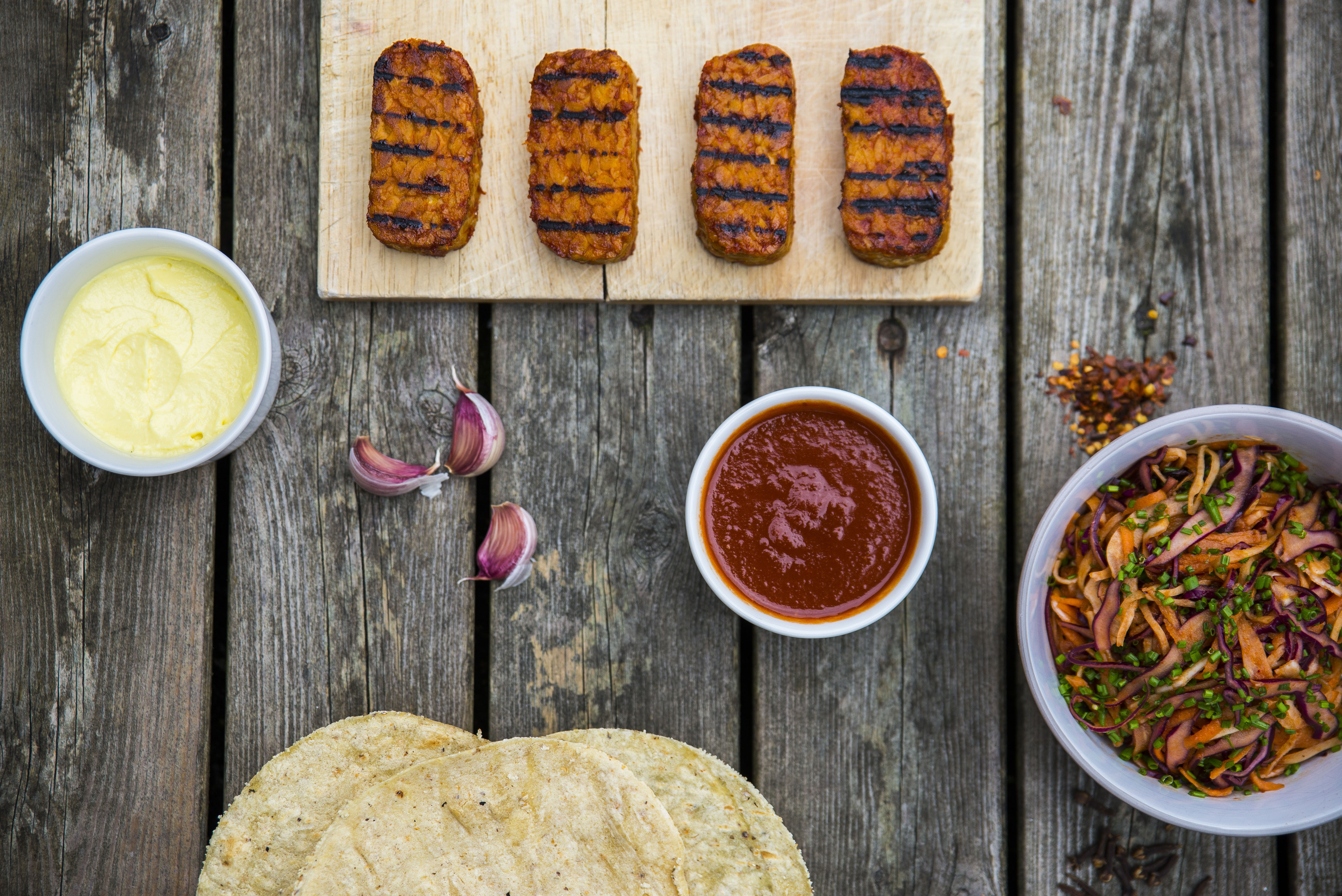
Here are a few recipes for a great outdoor summer meal, or with a little preparation, a tasty picnic. Originally from Indonesia, Tempeh is a traditional soy product and the only part that needs to be cooked. But by all means add some grilled corn on the cob and some marinated grilled vegetables to fill it out even more. At Cornucopia barbecues, we have served all of these along with some delicious Arun Bakery sourdough rolls and Blanco Niño’s new soft corn tortillas. When I make these recipes at home, I prep the sauces and tempeh the day before, which takes an hour at most. Then all I have to do the next day is fire up the barbeque, finish the tempeh, chop a few vegetables and assemble some sandwiches with heaps of time left for enjoying the food and the company you choose to share it with.
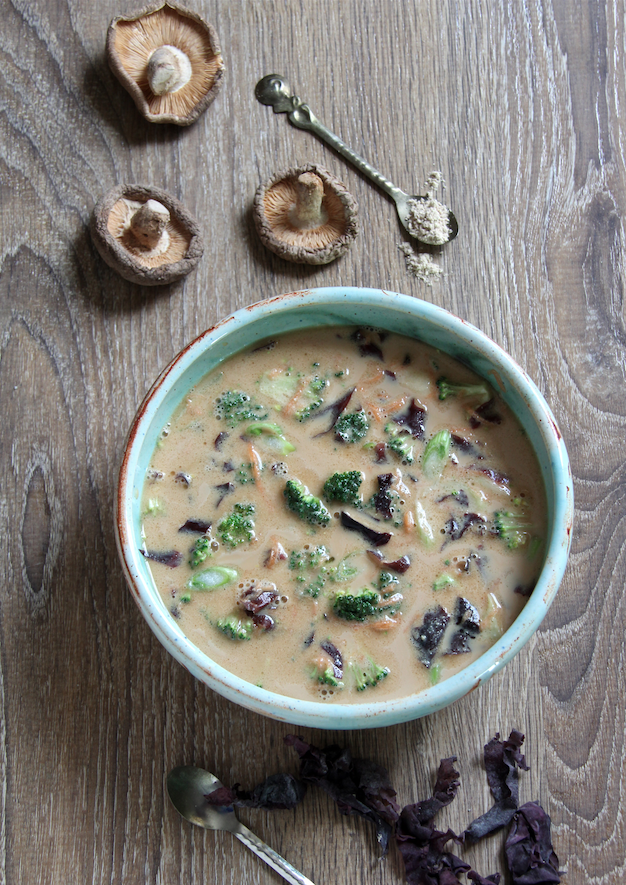
Cornucopia Warmed Raw/Living Broccoli and Dillisk soup in Shitake and Tamari Broth
This raw living soup was inspired by Chef Veronica O’Reilly of Healthy Habits Raw Foods café in Wicklow Town who I had the pleasure of working with a few years ago. We introduced this particular soup to Cornucopia Restaurant’s ever growing raw/vegan menu last year as the chilly weather started to catch up on us. This is a raw, albeit slightly warmed soup.
Broth:
Vegetables:
To Prepare the Cashew Cream, Broccoli and Mushroom Powder:
Make the cashew cream by soaking 100g of cashew nuts in enough water to cover the nuts. Leave in a cool place overnight/8 hours. Drain the cashews, discarding the water. Place the nuts in a high speed blender or hand-held stick blender. Add 250mls fresh water and process until it becomes cashew cream.
Prepare the marinated broccoli by chopping it into very small pieces, and placing in a bowl with the lemon juice and salt. Gently massage the lemon and salt into the broccoli and leave to marinade for at least eight hours also.
To make the mushroom powder, grind a couple of dried shitake mushrooms to a powder. You can use a high speed blender, an electric spice grinder or a mortar and pestle.
To assemble the soup:
Place the cashew cream, sesame oil, tamari and shitake powder in a medium sized bowl. Using a whisk, gently stir the ingredients to combine. Add the chopped dillisk, grated carrot, sliced scallion, and then the marinated broccoli into the broth, and stir to combine. Place into a fridge to chill until ready to serve. This will make a very thick broth which will be later mixed with warmed water to serve.
To finish and serve the soup:
Place the broth into four soup bowls, filling the bowls halfway. Boil water in a kettle, letting it cool to about 80*c, then add to the soup to warm.
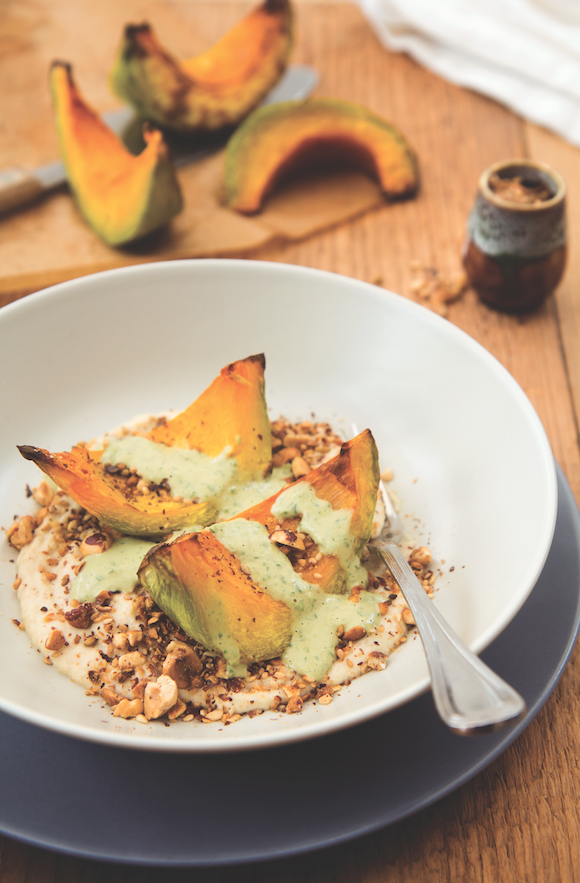
Baked Winter Crown Prince Pumpkin, Roast Cauliflower Puree with Parsley Tahini Sauce and Dukkah Seasoning
Crown Prince pumpkins are not the most commonly available in Ireland but grow very well in our northerly climate. Also known as ‘winter pumpkin’, they are available in many specialist greengrocers or farmers markets. If you can’t source them, a similar sized butternut squash will work just as well. Dukkah is an Egyptian seasoning that adds a pleasant crunch and excellent flavour . This recipe calls for cold pressed rapeseed oil but a similar virgin olive oil will also work. I like to use smooth dark tahini paste as it has a higher calcium and nutrient content, but again regular tahini will also work as an alternative.
Makes 4 medium servings.
Ingredients:
Cauliflower puree:
Parsley tahini sauce:
For the dukkah seasoning:
Method:
Preheat your oven to 180*c/350*f
Cut the pumpkin in half lengthways, then slice into eight pieces. Remove the seeds using a spoon and peel each wedge lightly using a vegetable peeler. Place the pumpkin pieces onto a baking tray, brush lightly with the 15mls of rapeseed oil and set aside.
Prepare the cauliflower by removing the outer leaves and stalk. Roughly chop the cauliflower and add 15mls of the rapeseed oil – then place on a baking tray. Set the pumpkin and cauliflower into the oven. The pumpkin will need 35 minutes to cook and the cauliflower will take about 25 minutes.
While the vegetables are roasting, prepare the tahini sauce by pureeing all the ingredients with a stick blender and set aside. Add the Dukkah ingredients to a dry, roasting pan, and place in the oven to toast for 15 minutes. Gently heat the soymilk in a saucepan. Once the cauliflower has softened and slightly browned, add it to the warmed soymilk and puree. Add the sea salt and then slowly drizzle in the remaining 80ml of rapeseed oil until it has emulsified. Once the dukkah has been toasted, remove from the oven, very coarsely chop and set aside. Remove the pumpkin from the oven for serving.
To serve:
Divide the cauliflower puree between 4 plates and lightly sprinkle with the dukkah seasoning. Place 2 pieces of baked pumpkin onto each plate and sprinkle with more dukkah seasoning. Finish each plate by pouring the parsley and tahini sauces over the cauliflower puree and baked pumpkin.
This website uses cookies to improve your experience. We'll assume you're ok with this, but you can opt-out if you wish. Accept Read More